
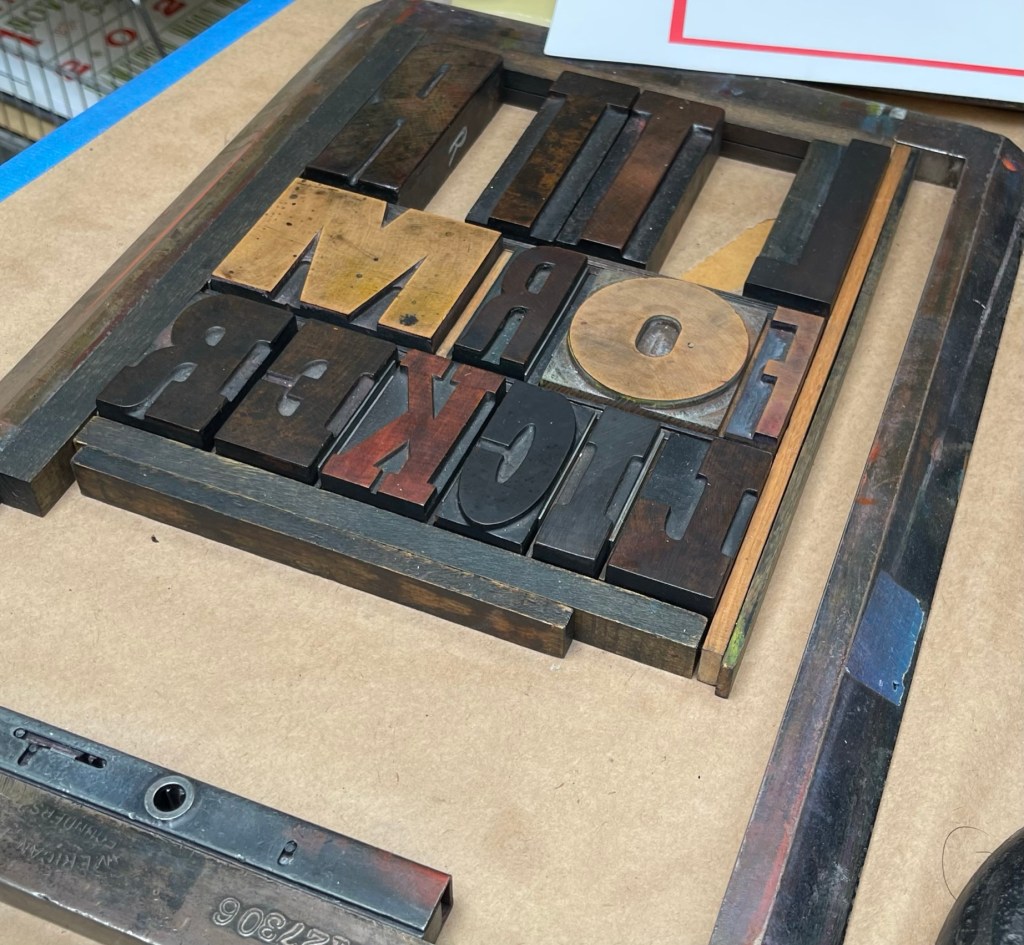
When I was a professor, I loved teaching revision. “It’s right there in the word,” I’d tell my students. “‘Revision’ is re-vision, ‘to see again.’ Look again. Look more closely.”
We’d practice it a lot of different ways: I made my students annotate assigned readings, each other’s drafts, and their own work—past work, too, not just in-process projects.
Revision came to be an act of reading and responding. I’d pull my sunglasses or blue-light blockers from my bag to remind them about the lenses we wear during revision. I’d put them on and take them off over and over to remind us that we have the power to change the lens through which we view things. Am I approaching this text as a reader? Am I approaching with compassion? Am I going in expecting to find something in particular?
It’s still a good reminder. We built revision muscles with practice, but the habit takes maintenance. I could always hear it when my students or I were flagging: the responses would turn into glancing blows, a bunch of blunt comments that were nowhere near the heart of the matter. The responses took on a judgy voice.
“I didn’t like this.”
“I liked it. Good job.”
“More,” “less,” “something’s missing.”
Some writers and teachers focus on tone, insisting that “constructive” criticism should sound positive or supportive or cheery. (Anybody heard of the “compliment sandwich” formula? Yuck.) But “constructive” feedback offers something to build on—again, it’s right there in the word.
The problem with the judgy voice is not that it’s “mean” or destructive or anything else it might in fact be. The problem is that it’s not specific enough. What would a writer do with a comment like, “I didn’t like it,” or even, “I liked it”? Where is there to go? How would that comment help shape our understanding?
The same goes with our thoughts. My own judgy voice is not super helpful when she chimes in. “That was dumb,” she might snap when I knock a full cup of coffee onto the floor. “How so?” I might ask her. “In what way? If it was indeed dumb, what do you suggest I do with that information?”
“Dumb” doesn’t get me anywhere. It’s nearly meaningless. Recognizing this doesn’t make the judgy voice go away, but if I’ve built up some friendly respondents to float around in my brain too, at least the judge isn’t the only one weighing in.
Because of what it does in the brain, depression makes curiosity hard to practice. You may be familiar with some of the flags depression sends up—”loss of interest in activities you typically enjoy.” Anhedonia is the term for that inability to find pleasure where you once could.
To me, it’s all the more reason to build a practice of revision. Learning to direct your attention, carefully and compassionately, to something before responding is a kind of superpower.
You can’t be curious and judgmental at the same time. It’s a tension worth exploring, so let’s get curious.
 Caitie Leibman (she/her)